5 hours ago
“Wait, Erie Too?!” How a Rust Belt Lake Town Became an Unexpected LGBTQ+ Haven
READ TIME: 6 MIN.
If you asked most people to name up‑and‑coming queer hotspots in North America, you would probably hear the usual suspects: Chicago, Seattle, or the beach‑town darlings like Provincetown and Rehoboth Beach, all of which are frequently highlighted as LGBTQ+-friendly destinations by major travel outlets and queer‑focused platforms such as Misterb&b and GayRealEstate.com.
The name Erie, Pennsylvania is not usually on that list. Yet over the last few years, this compact Great Lakes city—known more for snow squalls and steel history than drag brunches—is quietly building a reputation as a surprisingly warm spot for LGBTQ+ travelers and residents, shaped by local organizers, queer-owned spaces, and an increasingly visible Pride presence.
This is not a mass‑market, circuit‑party destination; it is the kind of place where bartenders know your name by the second night, Pride volunteers remember you from the parade route, and the drag performer who hosted your Saturday show might be serving coffee at the queer‑friendly café on Monday.
Erie sits in the far northwestern corner of Pennsylvania, on a stretch of Lake Erie shoreline that includes Presque Isle State Park, a peninsula known for its beaches, birding, and low‑key summer tourism. For decades, the city’s public image leaned industrial and conservative, with limited visible LGBTQ+ nightlife or dedicated queer spaces.
Over roughly the past decade, local LGBTQ+ advocates and allies have worked to shift that reality. Erie’s Human Relations Commission and City Council advanced protections under local non‑discrimination ordinances, aligning with statewide efforts in Pennsylvania to strengthen LGBTQ+ rights and local safety. Organizations including NW PA Pride Alliance and Erie Gay News have helped coordinate public events, legal education, and community resources designed to make queer residents more visible and supported.
While larger Pennsylvania cities such as Philadelphia and Pittsburgh have long‑standing queer neighborhoods and major Pride festivals, statewide assessments increasingly recognize the broader state—particularly municipalities with non‑discrimination protections—as relatively safer environments than some neighboring states for LGBTQ+ travelers and residents. Erie’s progress has unfolded in parallel with these shifts, translating policy changes into tangible local culture through bars, events, and grassroots groups.
Erie’s LGBTQ+ presence today is stitched together by a network of small organizations and business owners rather than a single flagship district. NW PA Pride Alliance, founded in 2012, has become a central hub, organizing Erie’s annual Pridefest and related events. According to public event listings and local coverage, the group coordinates a summer Pride parade and festival downtown, a Pride Picnic in one of the city’s parks, and supplementary gatherings such as drag shows and youth‑focused activities in partnership with other organizations.
Erie Gay News, a community publication founded in the 1990s, documents LGBTQ+ life in the city and surrounding region through event schedules, resource lists, and interviews with local activists, health providers, and faith‑based allies. The outlet’s coverage illustrates how grassroots leadership—often unpaid or lightly resourced—has sustained visibility in years when municipal funding or corporate sponsorship remained limited.
A key thread in Erie’s queer evolution has been youth and family support. Local organizations such as the Greater Erie Alliance for Equality and LGBTQ+‑affirming programs at regional health systems have hosted educational workshops, healthcare access events, and school‑focused trainings. This work mirrors broader U.S. trends in which smaller and mid‑sized cities leverage local nonprofits and health partners to provide affirming services for transgender people and queer youth despite limited nightlife infrastructure.
Erie’s queer‑owned or queer‑welcoming businesses have also helped anchor the scene. Local listings and tourism information highlight inclusive bars, cafes, and arts venues in and around the downtown, many of which explicitly promote Pride events, drag shows, and LGBTQ+-centered parties on their social media pages. While Erie does not have the density of LGBTQ+ bars found in major cities, the venues that do exist frequently serve multiple roles: nightlife space, informal community center, and organizing hub.
Erie’s Pride celebrations offer a concise window into how the city’s queer public life has grown. According to reports from NW PA Pride Alliance and local press, early Pride gatherings in Erie in the late 1990s and early 2000s focused on a community picnic and smaller events. Over time, organizers gradually expanded the program into a full Pridefest with a downtown march and festival, integrating local performers, faith communities, and advocacy organizations.
Recent editions of Erie Pridefest have taken place in prominent public spaces downtown, with street closures, vendor booths, and a main stage, reflecting a shift from semi‑private gatherings to a confident, city‑center celebration. Coverage from the Erie Times‑News notes participation from city officials and local businesses, illustrating a visible level of civic endorsement that was less common in earlier decades.
This trajectory aligns with patterns seen in other smaller U.S. cities where initial Pride events often start as lower‑profile or park‑based activities before growing into street festivals as local support solidifies. As of 2024, Erie’s Pride offerings combine a family‑friendly daytime festival with adult‑oriented after‑parties at bars and clubs, providing multiple access points for different age groups and comfort levels.
By conventional metrics—number of queer venues, scale of nightlife, national name recognition—Erie does not compete directly with large LGBTQ+ centers such as Chicago, Seattle, or San Francisco, all of which appear at or near the top of queer safety and travel indices. However, Erie leverages a few attributes that make it stand out as an “unexpectedly queer” destination.
First, there is scale. Erie’s population is under 100,000, yet it supports an annual Pride festival with city‑center visibility and multiple LGBTQ+ organizations, a proportionally large community footprint for a city of its size. That concentration can make the scene feel tightly knit to visitors accustomed to more diffuse big‑city neighborhoods.
Second, affordability and access matter. National reporting on “forgotten” or affordable queer cities notes that mid‑sized and Rust Belt communities have attracted LGBTQ+ residents priced out of coastal hubs, with examples such as Rochester, New York, and other secondary cities highlighted for their lower living costs and strong community networks. Erie sits in a similar economic context, offering comparatively lower housing costs than major metropolitan areas while providing access to nature, a compact downtown, and proximity to larger cities like Buffalo and Cleveland.
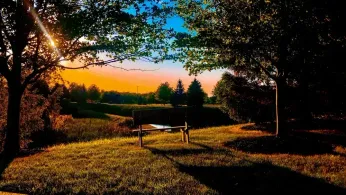
Third, outdoor culture plays a role. Presque Isle State Park’s beaches, multi‑use trails, and lakefront sunsets have long drawn regional tourists, and local LGBTQ+ groups frequently incorporate the park into Pride picnics, informal meetups, and recreational outings. For queer travelers seeking a quieter alternative to crowded coastal resorts, a day of hiking and swimming followed by a low‑key drag show or bar night can be an appealing combination.
Erie’s queer “sparkle” is less about rainbow‑wrapped chain hotels and more about overlapping cultural scenes. Local calendars compiled by Erie Gay News and regional arts organizations show a steady flow of drag performances, themed dance nights, queer‑inclusive open mics, and gallery events throughout the year. Performers frequently collaborate with benefit shows for LGBTQ+ nonprofits or mutual‑aid efforts, blending entertainment with fundraising and community care.
Intersectional organizing is also central. Greater Erie Alliance for Equality and partner organizations have hosted events focused on LGBTQ+ seniors, racial justice, transgender healthcare, and faith‑based inclusion, reflecting a broader national movement within LGBTQ+ communities toward addressing overlapping forms of marginalization. For visitors, this means the city’s queer spaces often foreground education and advocacy alongside social events.
The city’s colleges, including nearby Penn State Behrend and local universities, contribute another layer through student‑run LGBTQ+ groups that host workshops, campus Pride weeks, and collaborations with community organizations. During the academic year, this student presence brings additional energy to downtown events and helps maintain a generational pipeline of new organizers and attendees.
The emergence of Erie as an LGBTQ+-friendly destination is tied to broader shifts across the United States. As large‑scale legislative attacks on transgender rights and queer visibility rise in some states, travel writers and safety indexes increasingly highlight cities and states where legal protections and community support are comparatively stronger. Pennsylvania’s mixture of local non‑discrimination protections, active advocacy groups, and municipalities with high scores on national equality indexes has made it an important refuge for some LGBTQ+ people in the region.
Within that context, Erie offers a specific combination: relatively accessible housing and travel costs, a lakefront recreational setting, growing civic and business support for Pride events, and an established yet still intimate queer social infrastructure. For travelers accustomed to crowded, high‑cost coastal destinations, the appeal lies in discovering a city where a single weekend can meaningfully plug you into local networks rather than just dropping you into anonymous nightlife.
For some, the most surprising part may be how ordinary it feels: rainbow flags in café windows, Pride posters at the library, drag performers fundraising for a local health clinic, and families with Pride‑themed picnic blankets along the Presque Isle shoreline. In a moment when LGBTQ+ communities in many regions are navigating heightened scrutiny and legal threats, that ordinariness—queer life woven calmly into the fabric of a small Great Lakes city—can feel quietly radical.
For now, Erie remains under the radar, overshadowed by bigger names in queer travel guides. But if you find yourself on Interstate 90 with a long weekend to spare and an appetite for a smaller‑scale, community‑driven queer scene, the answer to “Wait, this town is queer now?!” might be waiting on the Lake Erie shore.